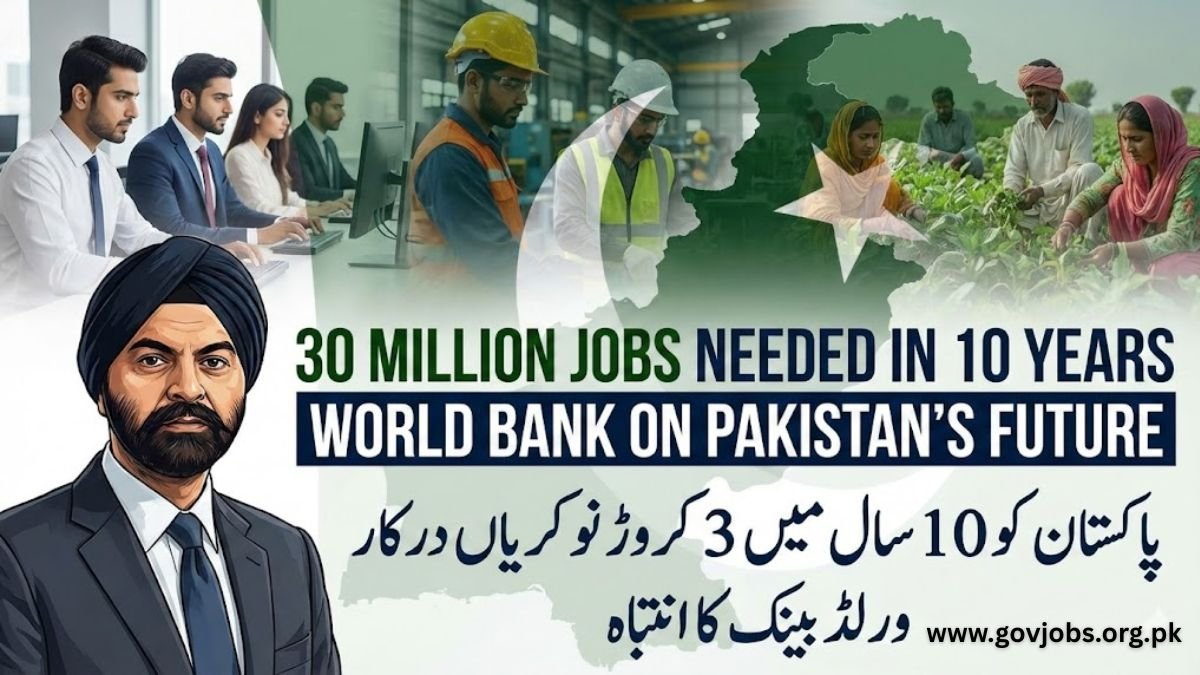
Pakistan needs to generate up to 30 million jobs over the next 10 years to transform its growing youth population into an economic advantage, according to World Bank President Ajay Banga. Failure to do so could lead to increased instability and outward migration, he warned during an interview with Reuters in Karachi.
Pakistan Needs 2.5 to 3 Million Jobs Annually
Ajay Banga stated that Pakistan must create between 2.5 million and 3 million jobs every year to keep pace with its rapidly expanding workforce. With a large proportion of the population under the age of 30, job creation has become one of the country’s most urgent economic priorities.
World Bank–Pakistan Partnership and $4 Billion Annual Support
Pakistan is now entering the implementation phase of a 10-year Country Partnership Framework (CPF) agreed with the World Bank last year. Under this partnership, the World Bank has committed approximately $4 billion annually to support Pakistan’s development goals, focusing on economic growth, job creation, and structural reforms.
At the same time, Islamabad continues to work closely with the International Monetary Fund (IMF) to stabilise its economy amid fiscal pressures and external financing challenges.
Agriculture Sector Could Generate One-Third of Required Jobs
According to the World Bank, agriculture has the potential to create nearly one-third of the total jobs needed over the next decade. Improving agricultural productivity, value chains, and rural livelihoods could play a key role in absorbing Pakistan’s young labor force and reducing unemployment in rural areas.
Power Sector Reforms Are the Most Urgent Need
Ajay Banga emphasized that reform of Pakistan’s power sector is the most urgent near-term priority. Inefficiencies, high costs, and governance issues in the energy sector continue to constrain industrial growth and private investment, limiting the country’s ability to generate sustainable employment.
Sustained Growth and Jobs Remain Pakistan’s Core Challenge
Despite international financial support, Pakistan faces mounting pressure to deliver long-term economic growth and meaningful employment opportunities. Experts agree that without structural reforms, investment-friendly policies, and sectoral development, the country may struggle to convert its youth bulge into an economic dividend.